The crushing-chamber family
HARDSTOCK
It crushes first, then composts. One chamber does both jobs, so accepted food waste needs no pre-sorting before it goes in.
HARDSTOCK takes larger bones, compostable packaging and plant trimmings, along with everything LIGHT takes.


Bones from the stock pot, shells from the raw bar, the rice that came back on the plate. Your team scrapes and closes the lid.

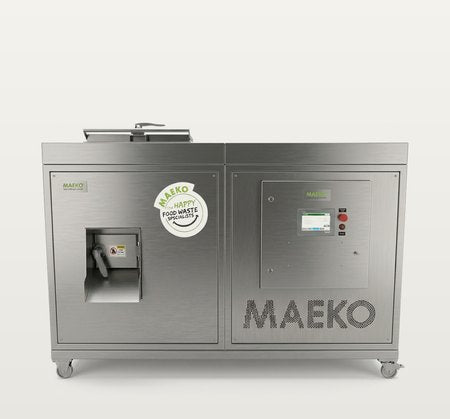
The crusher is inside.
AIRTEC aerobic composting, with the heavy-duty crushing chamber built into every CW model. Bone and shell are broken down in the same chamber that composts them. There is no second machine and no pre-sorting of accepted food waste. Accepted food waste, bones and shells can go into the same chamber. Plastics, cutlery, glass, foil, gloves, cigarettes and chemicals must still be removed.
- Temperature hold
- 70 °C for 60 minutes · DCTS controlled temperature hold, on every HARDSTOCK model
- Process
- 24 hours CW100–CW300 · 12–24 hours CW500 Gen 9.0, CW1000 and CW2000i · 24 hours CW5000
- Medium
- Speedozyme™ — Bacillaceae, Mucor, yeast, thermophilic and mesophilic groups and fungi. Over 50 billion CFU/g, with a pH range of 4.0–9.0. Ask us for the test method and report.
- Filtration
- Built-in on every model. The filter fitted — plain, nano or liquid — depends on the model and on what your site needs.
Five machines, by name.
They are not shown to scale — the capacity beside each machine is what puts it in order.


CW2000i and CW5000 are in the datasheet below. CW200 and CW300 are shown with their IoT panels. The CW500 comes in more than one generation; the datasheet lists each.
The whole family, on one page.
Compare capacity, chamber size, dimensions and weight.
CW100 to CW5000
It refuses less.
HARDSTOCK is not a bigger LIGHT. It is the family that takes the things a composter without a crusher has to send back.
Large bone, oyster and crustacean shell.
From CW100 up, every model in the family takes bones and sea shells. They are crushed and composted in one pass, in one chamber.
All of it, cooked or raw.
Fresh and cooked food waste, cooked rice dishes, spaghetti, spices, bread and bakery. Coffee grounds and tea bags, fruit peels, vegetable trim and garden waste, and suitable compostable food packaging approved for your machine. Everything the LIGHT range takes, this range takes too.
Size, not family.
Whole husks, whole green coconut and the very biggest bones are a question of which machine, not whether we can take them. Ask before the first load. The answer is a model number, and sometimes a pre-processing step.
Keep contaminants out of the composter.
Plastic, film, cutlery, glass, foil, ceramic, gloves, cigarettes. Keep these out of the composter.
The printable kitchen plate is on the home page: YES, ASK FIRST and NEVER in one sign, sized for the wall above the bin.
Two add-ons that go in front of it.
Neither one composts. They go in front of the machine, so it gets what it can handle.


Tell us what one day weighs.
A waste audit is how the model gets picked. It measures what your kitchen throws away in a day, how much of it is bone and shell, and where the machine would stand. You can start with a general enquiry before booking the audit.